
Cruising Ahead: Galveston’s Expansion, Global Lessons, and the Workforce Powering the Next Wave
A Port on the Rise
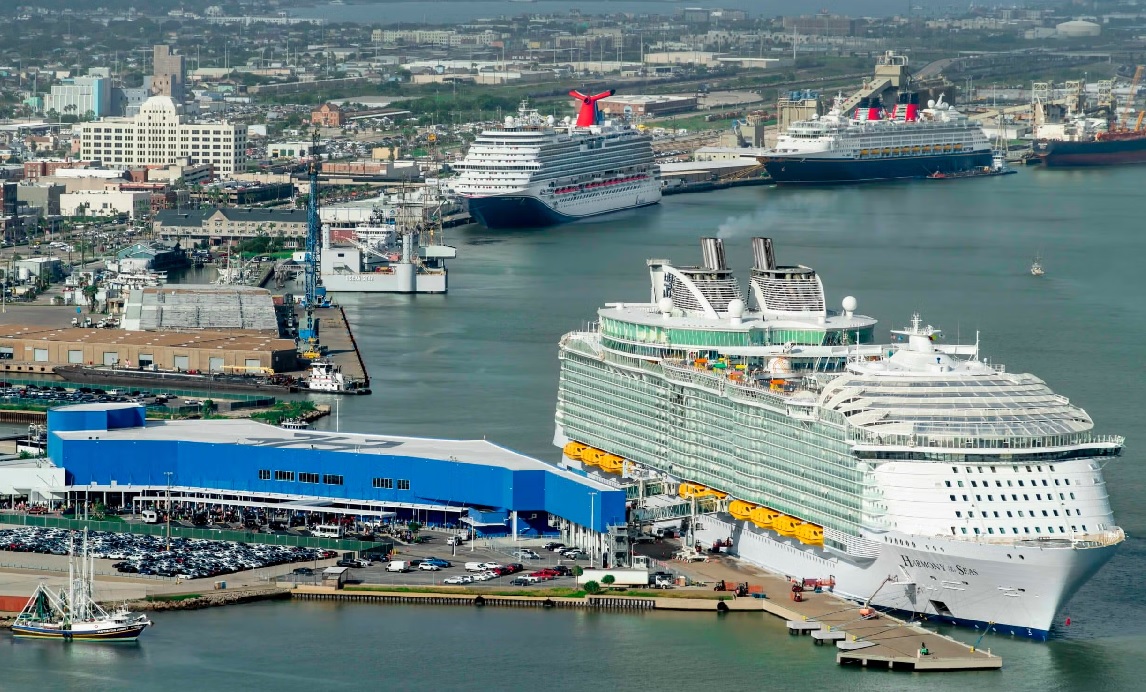
The Port of Galveston has entered a new chapter. Once considered a secondary cruise gateway, it now stands among the most dynamic cruise ports in the United States. With passenger volumes surpassing pre-pandemic levels and infrastructure investments reshaping its waterfront, Galveston is no longer simply participating in the cruise industry: it is helping to define its next phase.
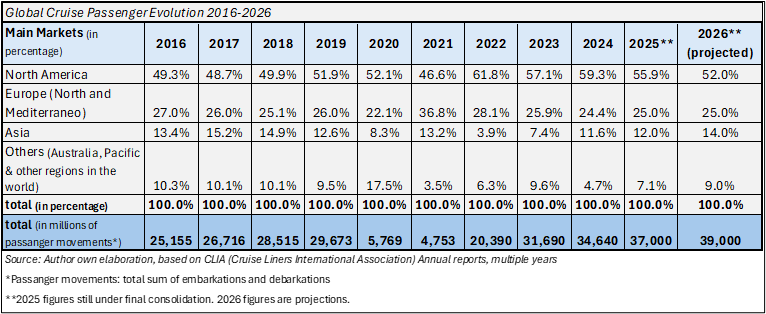
This transformation did not happen in isolation. The global cruise industry, after an unprecedented shutdown during the COVID-19 pandemic, has rebounded with renewed intensity. The passenger movement evolution (Table 2016-2026) leaves no doubt about this industry resilience. It went from being virtually dead for nearly 18 months, to an spectacular rebound in 202-2023 season. Ships are larger, itineraries more diversified, and passenger expectations higher than ever. In Galveston, these trends are visible in the arrival of next-generation vessels, the expansion of terminal capacity, and the increasing integration of cruise operations into the broader regional economy.
Yet, growth at this scale brings complexity. The cruise boom is not only about ships and terminals, it is about systems, communities, and people (Jensen and Hein, 2025).It raises fundamental questions about infrastructure, sustainability, governance, and, perhaps most importantly, workforce readiness (Pallis et al, 2019).
From Disruption to Acceleration
The pandemic years of 2020 and 2021 marked an abrupt halt for the cruise sector. Global passenger numbers dropped dramatically, ships were idled, and cruise terminals, once bustling gateways, stood empty (Cruise Market Watch, 2026). For ports like Galveston, the pause revealed the extent to which cruise activity is embedded in local economies, affecting everything from hospitality to transportation services.
By 2022, however, recovery was underway. Consumer demand returned faster than expected, supported by pent-up travel demand and renewed confidence in health and safety protocols. Cruise lines responded strategically, deploying newer, more efficient vessels and redesigning itineraries to align with evolving market preferences (CLIA, 2025).
Today, Galveston is benefiting directly from this rebound. Passenger volumes have grown steadily, and the port has solidified its position among the top cruise homeports in the United States. More importantly, the nature of cruise operations has changed.
At the opening ceremony for the Port of Galveston's fourth cruise terminal, Galveston Wharves Board then Chairman Vic Pierson said, “We want to give a warm Texas welcome to MSC Cruises as the world’s third largest cruise line enters the Galveston market. Having MSC and Norwegian Cruise Line homeporting in Galveston says a great deal about our position in the U.S. and global cruise markets.” (Port of Galveston, November 7, 2025)
The modern cruise ship is no longer simply a vessel, it is a destination. Mega-ships, often carrying more than 5,000 passengers, function as floating resorts, complete with entertainment districts, water parks, and diverse culinary experiences. Many itineraries now include private island destinations operated by cruise lines themselves, extending the cruise experience beyond traditional ports of call. This shift has implications far beyond the ship.
Bigger Ships, Bigger Pressures
The arrival of larger ships requires ports to adapt quickly. Deeper berths, expanded terminals, and more sophisticated passenger processing systems are now essential. Galveston’s recent investments, including terminals capable of handling Oasis-class vessels, reflect this reality.
But the pressures are not confined to port infrastructure. On peak embarkation days, thousands of passengers move through the city in concentrated waves. This creates challenges for urban mobility, traffic management, and service provision (Merk, 2013). Even in a city like Galveston, with a relatively open layout compared to historic European ports, these surges can strain local systems.
Environmental considerations add another layer of complexity. Cruise ships, particularly while docked, contribute to air emissions and noise pollution. While regulatory frameworks are pushing the industry toward cleaner operations, implementation varies across ports. The adoption of LNG-powered vessels and the exploration of shore power solutions are important steps, but they also require coordinated investment between ports, cruise lines, and local authorities.
In this context, the cruise terminal becomes more than an operational facility, it becomes a focal point of urban planning. (include here a quote from the Galveston Master Plan)
Global Lessons: A Shared Challenge
Galveston’s experience is not unique. Across the Atlantic, ports such as Genoa and Savona in Italy have undergone similar transformations. Like Galveston, these ports serve as homeports, integrating cruise operations with regional transportation networks, tourism infrastructure, and urban development strategies.
In Europe, the response has increasingly emphasized integrated governance. Regional port authorities coordinate across multiple ports, aligning cruise strategies with broader economic and environmental goals. Differentiation, where ports specialize in distinct market segments, has become a tool for managing growth while minimizing local pressures.
The lesson is clear: cruise growth cannot be managed in isolation.
Ports and cities must move from a model of coexistence to one of co-evolution, where infrastructure development, tourism strategy, and community well-being are planned together. This ecosystem approach recognizes that ports and cities are not competing entities but interdependent systems (Papathanassis, 2025).
Galveston, with its governance structure and close ties to the City of Galveston, offers a different (but equally instructive) model. Investments in cruise terminals have been accompanied by efforts to enhance waterfront development, improve connectivity, and preserve the city’s unique character. The New Master Plan of Port of Galveston leaves no doubt about that aspect. If approved as presented, the plan will completely redefine the waterfront on Galveston harbor, as well as the city integration.
Rodger E. Rees, Port Director and CEO of Galveston Wharves has said: “We were building our fourth cruise terminal when we were not supposed to have that done until 2030, so what we did was we decided to go ahead and upgrade and do a new master plan.” (Houston Public Media, 2026).
The Port of Galveston’s master plan outlines a clear strategy centered on five core priorities. At its foundation is a commitment to financial sustainability, ensuring that revenues are strengthened while maintaining efficient cost management. This is supported by continued investment in infrastructure, with a focus on optimizing port assets to enhance operational performance and long-term economic value. The plan also emphasizes business development, seeking to expand existing activities while attracting new opportunities that generate jobs and regional growth. Strengthening communication is another key pillar, with efforts aimed at building stronger relationships with stakeholders and elevating the port’s visibility at both regional and national levels. Finally, the plan highlights the importance of people, promoting a culture of excellence through safety, environmental stewardship, professional development, and strong ethical standards (Port of Galveston, 2026).
I“The cruise business is a lot of fun, it makes a lot of money, but economically speaking, it is what’s allowing us to rebuild this whole port,” said Rees. (Houston PublicMedia, 2026)
The Missing Piece: Workforce Capacity
While infrastructure and governance often dominate discussions, one critical element remains underappreciated: the workforce. The cruise industry’s rapid expansion is creating demand for a wide range of professionals. Onboard, there is a need for licensed deck officers, marine engineers, and technical specialists capable of operating increasingly complex vessels. Shoreside, the demand extends to logistics planners, port managers, tourism professionals, and policymakers. This is not a narrow skill set: it is an ecosystem of competencies. And it is here that Texas A&M University at Galveston ("TAMUG") plays a central role.
Educating the Next Generation of Maritime Professionals
As the maritime campus of Texas A&M University, TAMUG is uniquely embedded within the Galveston port ecosystem. Through the Texas Maritime Academy, the university prepares students to become licensed deck and engineering officers, equipped with the technical and operational expertise required to serve on vessels worldwide.
Traditionally, maritime academies have focused on cargo shipping. However, the growth of the cruise industry is expanding career pathways. Cruise lines increasingly seek officers who combine technical proficiency with adaptability, leadership, and an understanding of passenger-focused operations.
TAMUG graduates are well-positioned to meet this demand. Their training emphasizes not only navigation and engineering but also decision-making, teamwork, and safety, skills that are critical in the highly dynamic environment of modern cruise ships. But the workforce needs of the cruise industry extend beyond the ship.
Bridging Port and Community: The TCCD Program
The expansion of cruising in Galveston is deeply intertwined with the city’s identity as a coastal destination. Managing this relationship requires professionals who understand not only maritime operations but also tourism dynamics, community development, and sustainability.
 The Tourism and Coastal Community Development ("TCCD") program at TAMUG addresses this need directly (TAMUG, 2025). Designed as an interdisciplinary program, TCCD equips students with a broad set of marketable skills that are highly relevant to the cruise sector. Dr. JoAnn DiGeorgio-Lutz, Professor and Department Head of the Department of Department of Maritime Studies of Texas A&M University at Galveston says: “Our graduates enter the tourism industry equipped with the essential academic and practical skills from cross-cultural communication to leadership abilities in a growing and diverse industry sector.”
Beyond its interdisciplinary structure, the program is intentionally designed to cultivate a portfolio of industry-relevant competencies that align with the operational realities of cruise destinations. Students are trained to move from problem identification to solution design, learning how to define complex challenges, gather and interpret information, and set actionable goals. They develop the ability to communicate effectively across formats and audiences, whether facilitating stakeholder discussions or presenting findings to decision-makers. Equally important is the emphasis on collaboration: students learn to work in teams, build rapport, and contribute meaningfully to shared projects, an essential capability in environments where port authorities, tourism boards, and private operators must coordinate closely.
The program also integrates technological fluency, preparing students to use digital tools for research, data interpretation, and professional presentation. Alongside these capabilities, students develop strong professional habits, including time management, accountability, and the ability to implement decisions effectively. In a global industry such as cruising, intercultural awareness is critical; students are trained to understand cultural differences, engage with diverse perspectives, and contribute to inclusive environments. Leadership development is embedded throughout the curriculum, encouraging students to initiate ideas, inspire others, and help shape forward-looking strategies for coastal communities.
These competencies are not confined to the classroom. TAMUG actively connects students with industry through experiential learning opportunities that bring theory into practice. For example, students regularly participate in technical, guided visits aboard cruise vessels homeporting in Galveston, such as the Carnival Breeze and Mariner of the Seas. During these visits, students engage with onboard officers and crew, gaining firsthand insight into bridge operations, hotel management systems, safety protocols, and passenger logistics.
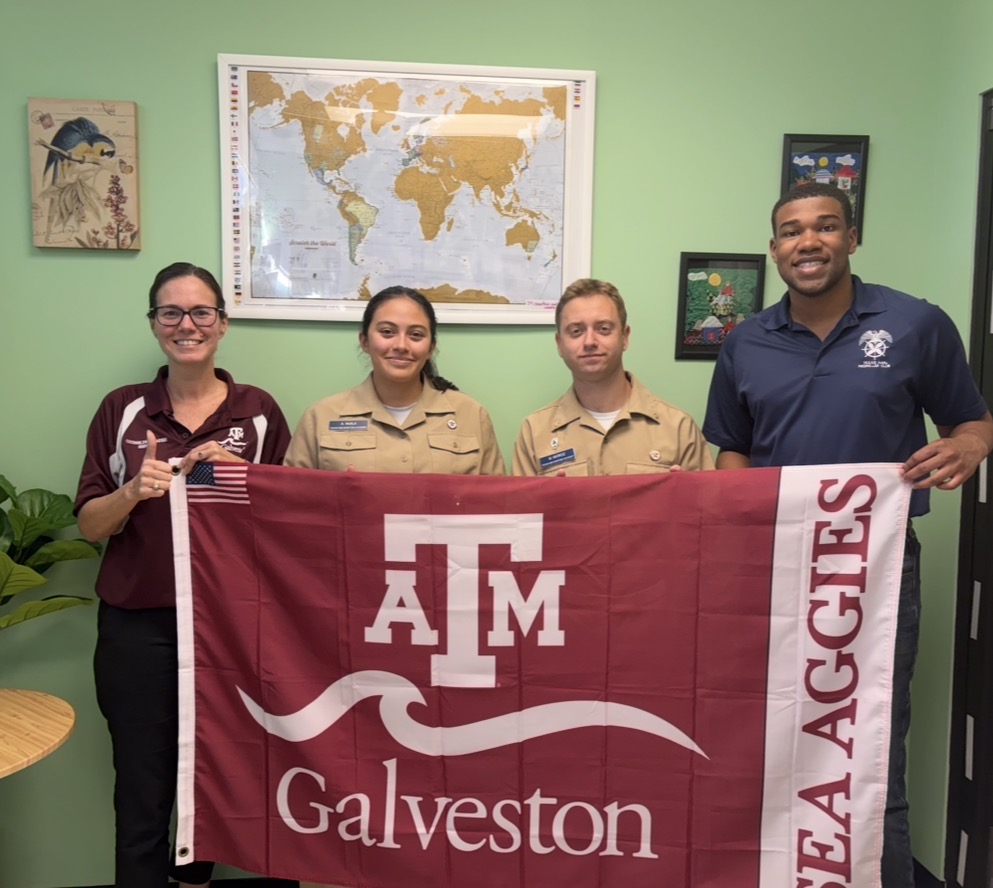
“As a TAMUG student, I found the most intriguing aspect of the tour to be the integration of various ship systems and terminal operations that facilitate the smooth and safe movement of thousands of passengers during embarkation," said Dana Keenan, Tourism and Coastal Community Development Graduate, Class of 2025.
“The cruise ship technical tours allowed me the opportunity to ask the mates/officers onboard valuable questions regarding the duties and life as a seafarer on a cruise ship," said Michael Moroz, Maritime Transportation Major, Class of 2026.
“I found the amount of work throughout the ship done to accommodate thousands of guests taught me how different departments interact with one another to provide an efficient experience for the guests. I feel like I can apply multiple aspects of our visit to my Hospitality major," said Scott Lyons Jr, Tourism and Coastal Community Development Major, Class of 2026.
These experiences allow students to observe how large-scale cruise operations function in real time, reinforcing classroom concepts while exposing them to potential career pathways across both maritime and tourism sectors.
Innovation in the Classroom: Preparing for a Changing Industry
Recognizing the rapid evolution of the cruise sector, TAMUG has expanded its academic offerings to include courses such as Global Cruising. This course introduces students to the structure and dynamics of the cruise industry, covering topics such as itinerary planning, port selection, passenger experience, and sustainability challenges.
Dr. Jenna Lamphere, Assistant Professor at the Department of Maritime Studies of Texas A&M University at Galveston says: “The TCCD program is unique, offering students multi-disciplinary knowledge and experiences critical to working professionals in the rapidly changing cruise industry. The program could not better situated in Galveston, where students learn first hand about the socio-technical and environmental factors driving industry change, as well as how that change is transforming our local communities.”
By integrating maritime business, tourism, and environmental perspectives, the course reflects the interdisciplinary nature of the industry itself. It prepares students not only to understand current trends but also to anticipate future developments.
Sustainability and the Future of Cruising
Environmental accountability is no longer optional, it is central to the industry’s future. The deployment of LNG-powered vessels, investments in shore power infrastructure, and the development of more efficient port operations are all part of a broader transition toward sustainability. At the same time, destinations must address issues such as congestion, emissions, and the distribution of economic benefits (Carnival News, September 9, 2025).
For Galveston, this means integrating cruise development into a broader vision of sustainable coastal growth. It involves collaboration between port authorities, city planners, industry stakeholders, and educational institutions. Education, once again, plays a key role.
A Living Laboratory for the Cruise Industry
Galveston represents more than a successful cruise port, it represents a dynamic environment where industry, community, and education intersect.
Students at TAMUG are not learning about the cruise industry in abstraction. They are observing it firsthand, engaging with it, and, in many cases, becoming part of it. The proximity of the campus to the port creates opportunities for experiential learning, industry collaboration, and applied research.
This integration of theory and practice is a powerful asset. It allows for the development of solutions that are grounded in real-world conditions and responsive to the needs of industry and community alike.
Charting the Next Course
The continued growth of cruising in Galveston is both an opportunity and a responsibility. It offers the potential for economic development, job creation, and enhanced connectivity. At the same time, it requires careful planning, collaboration, and investment in the systems that support it.
Infrastructure will remain important. So will governance. But the long-term success of the cruise industry in Galveston, and beyond, will depend on people. As bigger ships arrive and new terminals open, the focus must also turn to the workforce that will operate, manage, and sustain this growth. Institutions like Texas A&M University at Galveston are at the forefront of this effort, providing the education and training needed to meet the demands of a changing industry.
In this sense, Galveston is not only a port of departure, it is a point of convergence, where global trends, local realities, and future possibilities come together. And in charting this new course, the partnership between port, city, and university may prove to be one of its greatest strengths.
Ed. Note: The citations referenced in the article can be found online at txgulf.org\citations.
About the Author
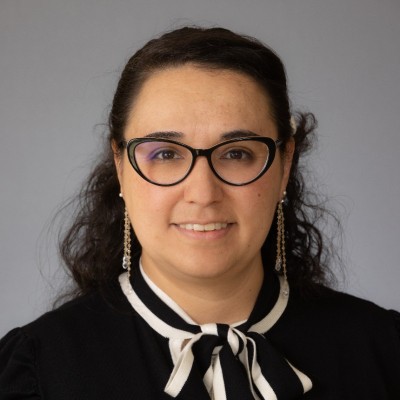
Dr. Cassia B. Galvao
College of Marine Sciences & Maritime Studies
Texas A& M University at Galveston
galvaoc@tamug.edu