Why Critical Exercise Participation is Key to the Houston Ship Channel
The Houston Ship Channel is not simply a waterway serving the Gulf Coast, it is one of the most critical pieces of infrastructure in Texas and in the United States. As the backbone of the nation’s energy logistics network, it plays an indispensable role in fueling domestic industry, supporting global trade, and safeguarding economic stability. Its importance extends far beyond regional commerce as it is a strategic national asset whose security and resilience directly impacts the country’s energy supply chain.
Stretching 52 miles from the Gulf of Mexico to the turning basin, the Houston Ship Channel supports one of the busiest ports in the United States in terms of tonnage. More importantly, it anchors the largest petrochemical complex in the Western Hemisphere and the largest refinery in the United States. Refineries and petrochemical facilities along the channel process a significant percentage of the nation’s fuel supply, including gasoline, diesel, jet fuel, and liquefied natural gas. Crude oil imports and exports, refined products, chemicals, and other bulk commodities move through this corridor daily, connecting Texas energy production to global markets.
For Texas, the Houston Ship Channel is an economic engine. It supports hundreds of thousands of jobs, generates billions in economic activity, and reinforces the state’s leadership in energy production and export. For the nation, it is a strategic energy hub. Disruptions to this waterway, whether caused by natural disasters, cyber incidents, security threats, or accidents, can ripple across supply chains, affecting fuel prices, industrial production, and national security.
Given its strategic significance, the Houston Ship Channel must be treated as the critical infrastructure it is. Security, operational continuity, and resilience require constant coordination among all stakeholders from the federal, state, and local authorities, as well as private industry partners. The Maritime Transportation Security Act (“MTSA”) framework provides the structure for this collaboration, but the effectiveness of that framework depends on consistent communication, preparedness, and shared responsibility.
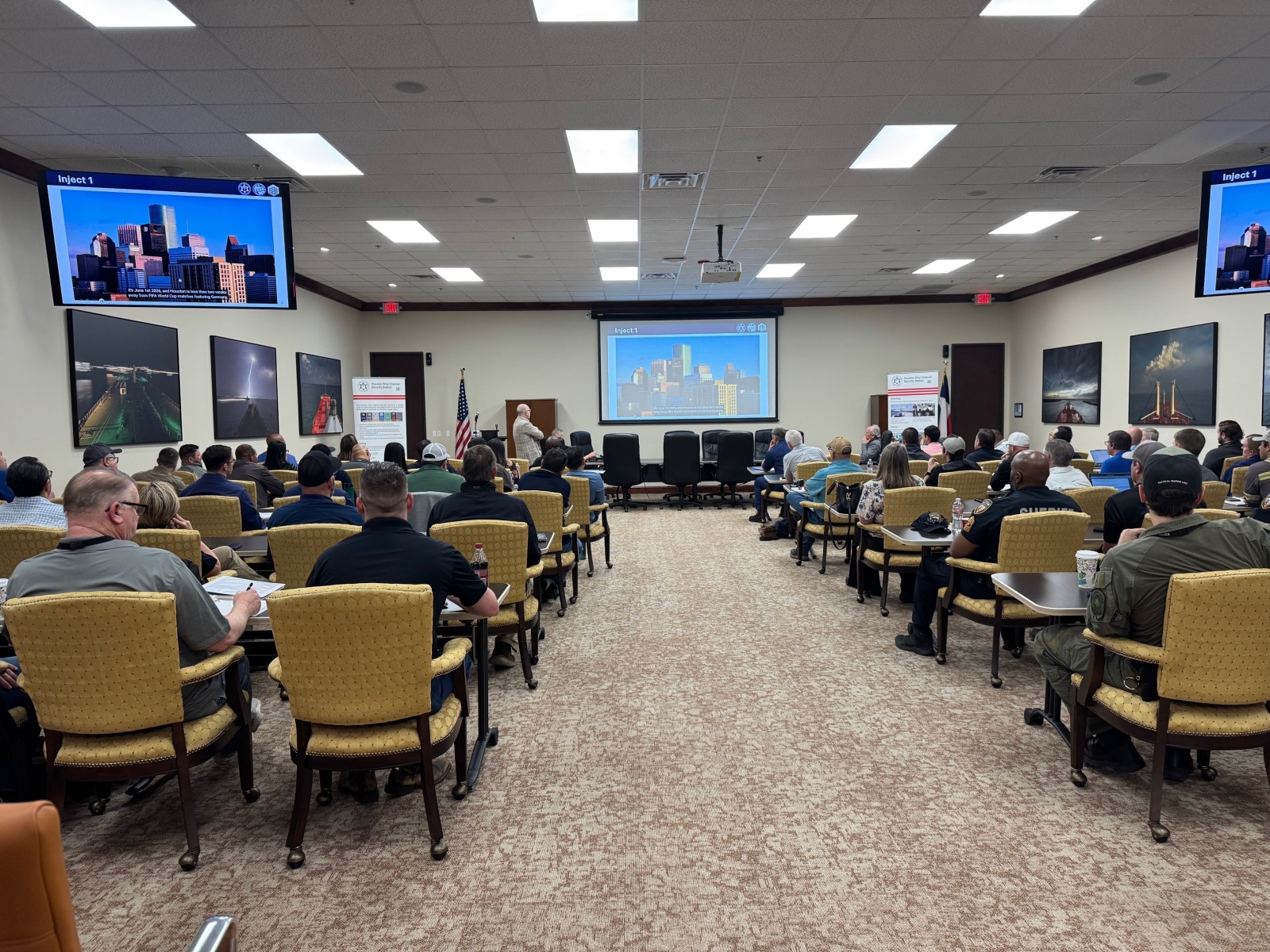
A recent tabletop exercise conducted in partnership between the Houston Ship Channel security district and the Port Bureau demonstrated the value of proactive coordination. The exercise brought together the U.S. Coast Guard, local and state law enforcement agencies, Federal Bureau of Investigation, and approximately 70 representatives from waterfront facilities to evaluate response protocols in the event of a port disruption.
The goal was not merely compliance, but the development of lessons learned and best practices to strengthen our collective preparedness. These exercises are essential. They create an environment where stakeholders can identify gaps, test communication channels, and clarify roles and responsibilities before a real-world incident occurs. In the complex ecosystem of a major port, timely and accurate information sharing is critical. Whether addressing a security threat, a hazardous materials incident, or a shift in operational posture, coordinated communication ensures that decisions are implemented effectively across all facilities.
"Exercises with partners like the U.S. Coast Guard, local and regional partners remind us that before any regional security event, the most important tool we have is clear coordination, sharing information, aligning expectations, and building trust so that when it matters most, we respond as one unified team,” said Jessica Thomas, chairman, Houston Ship Channel Security District.
Special recognition is due to the U.S. Coast Guard personnel and the law enforcement agencies who participated, as well as the waterfront facility representatives who committed their time and expertise. Their engagement strengthens the Captain of the Port’s ability to communicate efficiently and effectively regarding security measures and any adjustments to MARSEC Levels. When stakeholders understand how information flows and how decisions are made, the entire port community becomes more resilient.
As threats evolve, whether physical, cyber, or geopolitical, continued investment in exercises, training, and interagency collaboration is not optional; it is imperative. Organizing regular MTSA tabletop exercises and similar preparedness initiatives ensures that communication lines remain clear, response procedures remain current, and trust among stakeholders remains strong.
Ultimately, port security is a shared responsibility. It does not rest solely with federal authorities or law enforcement. Every facility operator, employee, contractor, and maritime partner plays a role. Vigilance in reporting suspicious activities, adherence to established security protocols, and commitment to best practices are essential components of maintaining the integrity of our ports.
The Houston County Sheriff's Office (“HCSO”) Maritime Tactical Operations Section is part of the USCG Maritime Tactical Operations Group (“MTOG”), which serves as a force multiplier for the U.S. Coast Guard. Numerous federal, state, and local stakeholders operate in and around the Port of Houston, which spans multiple jurisdictions. Combined with the vital role the Houston Ship Channel plays in the local, state, and national economy, it becomes clear how critical preparedness and coordination are for this region.
Threats to the channel include natural disasters such as hurricanes and tornadoes, as well as man-made incidents such as chemical leaks, fires, and explosions. Additionally, the potential threat of terrorism is ever-present. For these reasons, partnerships among federal, state, and local first responders are essential.
“We must build and maintain strong relationships with the agencies that would respond to these incidents to ensure a coordinated and effective response to large-scale emergencies,” said David Jasper, Captain Industry & Emergency Management Division, HCSO. IS THIS CORRECT!!
These relationships are strengthened through information sharing, joint training opportunities, including tabletop exercises, and collaboration in the planning and execution of major events.
The Houston area frequently hosts large-scale events, such as the Houston Livestock Show and Rodeo (the largest rodeo in the world, attracting more than two million visitors over the course of a month), the inaugural Houston USN Fleet Week, and the FIFA World Cup. Virtually every first responder agency in the region plays a role in these events. Participating in such operations enhances preparedness and interoperability among Houston-area first responders.
“Bringing together federal, state, and local agencies and facility stakeholders to participate in an MTSA / security table-top exercise enhances preparedness for the entire Ship Channel and is another example of how the Houston Ship Channel Security District fosters collaboration and enhances emergency response planning,” said Steve Roberts, Roberts Law Group / Chemical Security Group.
The Houston Ship Channel is a cornerstone of Texas prosperity and a strategic asset for the United States. Protecting it requires continuous collaboration, disciplined communication, and a collective commitment to security. Port security is something we all must do and something we all must take seriously.