
Bridging the Gap Between Maritime Education and Industry
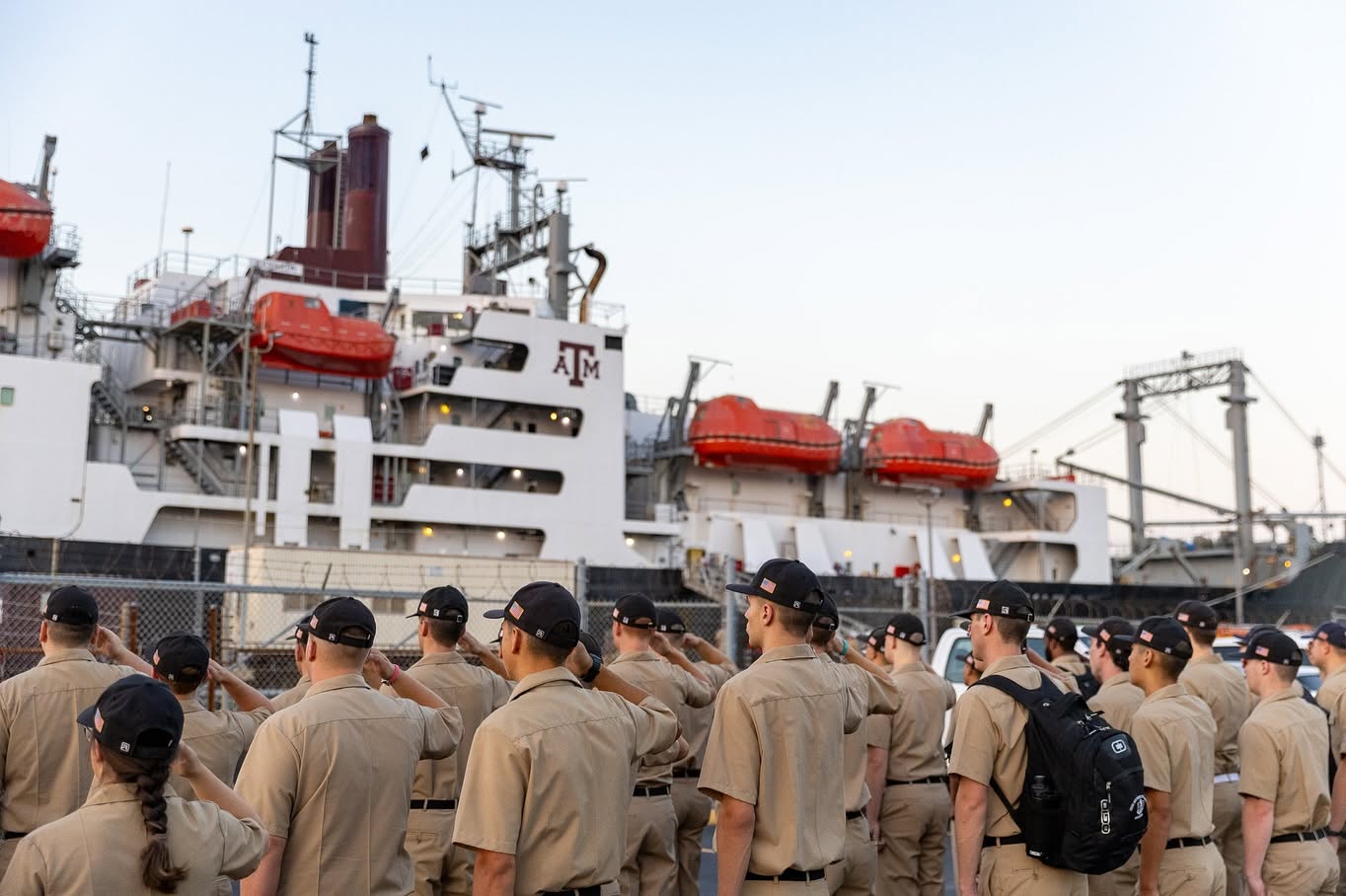
Dr. Cassia B. Galvao, from Texas A&M University-Galveston's College of Marine & Science & Maritime Studies, recently sat down with John F. Hark, Chartering Director, North America, for Bertling Logistics, to discuss the skills students need, the evolving role of technology, and how educators and employers can work together to build the maritime workforce of the future.
With nearly 25 years of teaching experience and more than three decades in the maritime and logistics industry, John F. Hark, Jr. brings a unique perspective to the classroom and the workplace. Hark teaches brokerage, chartering and maritime transportation. He is also deeply involved in workforce development and industry-education initiatives, including serving as Faculty Advisor to the Student Association of Maritime Administrators and as a board member of Port Houston Partners in Maritime Education.
From the Classroom to the Workplace
What is the biggest gap between what students learn in the classroom and what they encounter when they enter the maritime industry?
In the classroom, we give students the fundamentals. In my brokerage and chartering course, for example, students learn the theory of the chartering industry, the mechanics of negotiation, charter party clauses, international laws governing maritime trade, and financial aspects of chartering.
What is harder to teach is how to operate in a fast-paced industry, particularly when disruption has become almost structural rather than episodic. Since COVID, we have experienced continuing geopolitical events, supply chain disruptions, tariffs, weather events, and other challenges. Dealing with those situations requires experience and wisdom, but we can begin preparing students by developing their critical and creative thinking.
Another word I increasingly use is finesse, in its positive sense. Maritime professionals often need to handle customer issues, claims, negotiations, and unexpected problems with judgment and sensitivity. That also requires a sense of urgency. Those qualities are difficult to teach from a textbook, but we can make students conscious of them.
Students should start developing these capabilities while they are still in college, through leadership positions, student organizations, industry events, internships, and other experiences. Sometimes I tell young people to “pump the brakes” before acting: think about what needs to happen and then respond appropriately.
We teach the theory, but on the first day of work, graduates may also be expected to write a clear professional email, communicate with someone overseas, respond quickly to a problem, and begin demonstrating judgment. That is where the transition from classroom knowledge to professional practice becomes critical.
I also devote part of my classes to discussing current industry news. Rather than simply telling students why an article matters, I ask them: Why did I select this? How could this event affect our industry? Students need to develop the habit of connecting what they learn in class with what is happening in the world.
Preparing for an AI-Driven Industry
Artificial intelligence is transforming the maritime industry. Which changes will most reshape the skills employers expect from graduates?
There is considerable discussion about AI potentially reducing entry-level jobs. We have seen similar concerns before. Years ago, customer service centers and other functions moved overseas, and people worried about what that would mean for entry-level employment in the United States. There were effects, but the outcome was not necessarily the disaster some predicted.
AI may develop differently, but one thing is clear: I expect young professionals entering the workforce to understand these tools. They need to know how to use platforms such as ChatGPT and other AI applications, what those tools can and cannot do, and where their limitations are.
That does not mean using AI to write papers or avoid learning. It means understanding how AI can support professional work, for example, data analytics, summarizing information, reviewing contracts and charter parties, and processing large amounts of information.
Students also have to take some responsibility for learning these technologies themselves. Technology is changing so rapidly that universities and professors will inevitably struggle to keep curricula completely current. Students therefore need agency over their education.
Ten or fifteen years ago, I told students they needed to stand out by knowing Microsoft Word, PowerPoint, and especially Excel. Universities did not necessarily offer entire courses teaching those tools; students were expected to develop those capabilities. AI is becoming similar. Employers increasingly expect graduates to arrive with some familiarity.
Ultimately, this comes back to lifelong learning. The pace of change outside an organization, or outside an individual professional, cannot continually exceed the pace of change within. Students need to understand that lifelong learning does not begin after college. It begins in college.
Bringing Maritime into the Classroom
How can educators better connect traditional business disciplines such as accounting, finance, marketing, and management to ports, shipping, terminals, and logistics?
When you are educating students for a niche industry such as maritime, I believe there is an obligation to incorporate that industry into foundational courses, not only specialized upper-level courses.
Accounting, finance, marketing, management, leadership, and human resources can all incorporate maritime examples and challenges. Otherwise, we risk teaching the discipline without adequately connecting it to the environment where graduates will work.
Fortunately, industry professionals can help. Educators can approach organizations such as the Greater Houston Port Bureau and other professional associations and ask: Can you identify an HR professional who could speak to our HR class? Can you connect us with a CFO who could provide input into an accounting course?
But this is a two-way street. Business professionals also need to reach into education. It is not enough for employers to complain that universities are not producing the people they need. Industry has to become part of the solution.
That participation can occur through advisory councils, classroom presentations, mentoring, student organizations, internships, professional associations, or eventually teaching as an adjunct professor. Not everyone can commit to teaching an entire course, but almost every experienced professional can contribute in some way.
The relationship also has to be consistent. A brand (and trust in that brand)is built through time and consistency. The same applies to an educational institution’s relationship with industry. Professors need to attend industry events, invite professionals into classrooms, and maintain relationships. You cannot do it once and expect lasting results.
Houston has an especially strong opportunity because its maritime education ecosystem includes high schools, community colleges, universities, industry organizations, and one of the country's major maritime clusters. Developing that ecosystem requires sustained engagement.
What Makes a Graduate Industry-Ready
What distinguishes graduates who are truly “industry-ready” from those who are academically well prepared but struggle to transition into professional practice?
Industry-ready graduates demonstrate critical thinking, interpersonal skills, professional awareness, and some degree of finesse. You can often tell when speaking with someone whether they are comfortable interacting with people and working through a problem methodically.
Internships help, but not every student will have an internship. Students can develop many of these abilities through leadership positions, student organizations, volunteering, part-time employment, and other activities. Those experiences require them to work with different personalities, resolve disagreements, communicate, and take responsibility.
Students also need to become students of the world around them. Maritime is a global industry. A graduate should have some awareness of issues such as the Strait of Hormuz, decarbonization, seafarer shortages, geopolitical conflicts, automation, and AI.
They do not need to be experts on every subject. But if they attend an interview, luncheon, or professional event, they should be able to ask an employer: How is this development affecting your company?
Students should also get outside their comfort zones. Join organizations beyond your major. Meet students from different countries. Develop cultural awareness. The maritime industry is global, and graduates need to be prepared to interact with people whose backgrounds and perspectives may be very different from their own.
Nobody is 100 percent ready for their first job. Employers understand that there will be a learning curve. But students can do many things during college that make that transition considerably easier.
The Professional Skills that Matter
Employers increasingly value problem-solving, communication, and interdisciplinary abilities. Which professional skills are most important in today's maritime workplace?
Writing is one of the most important. From the first day on the job, a graduate may have a laptop and an email account and be expected to communicate with colleagues overseas, trucking companies, steamship lines, stevedores, customers, or other partners. They need to communicate clearly and professionally.
Alongside writing, I would emphasize verbal communication and critical thinking.
That is one reason I encourage students to think carefully about electives. Take maritime electives, certainly, but also consider psychology, philosophy, science, mathematics, or other subjects that help you develop intellectually. Do not take an elective simply to check a box.
Universities should deliberately create opportunities for students to write, speak, discuss difficult subjects, think ethically, and defend their reasoning. In maritime, that can mean discussing geopolitically sensitive issues without necessarily taking a political position. Students should be able to explain how a conflict affects shipping, trade, insurance, or supply chains.
Reading is equally important. Maritime professionals may have to read lengthy contracts, purchase orders, charter parties, regulations, and reports. Professional life does not arrive in short snippets.
Interestingly, AI may make these human capabilities even more important. To use AI effectively, you still need to communicate clearly. And professionals cannot become completely dependent on technology. The internet may go down; systems may fail. Work still has to continue.
Technology should enhance human capability, not replace the ability to read, write, communicate, reason, and make decisions.
Industry Must Help Build the Workforce
What role should industry play in shaping university curricula beyond providing internships?
I often attend industry conferences where there is a workforce panel and employers say, “We cannot find good people,” or complain about the preparation of new graduates.
My response is: be part of the solution.
Companies have numerous ways to become involved. Most logistics and maritime education programs have advisory councils, and schools actively seek professionals who can provide feedback. Companies can offer internships, send employees into classrooms, mentor students, participate in curriculum discussions, and encourage experienced professionals to teach.
Internships themselves require commitment. Someone has to supervise the intern, develop meaningful work, and explain to staff why mentoring that student matters. But companies cannot simply continue recruiting experienced employees from competitors. The industry needs to develop its future workforce.
Education is also competitive. Universities compete for students, but that competition can make the overall educational product in a region stronger. Ultimately, the “customer” is not only the student. The industry that will employ that graduate is also a stakeholder in the educational process.
Companies therefore need sustained relationships with educational institutions rather than contacting schools only when they suddenly need employees.
Making Maritime Careers Visible
Maritime competes with many other industries for young talent. What can educators and employers do together to make maritime careers more visible and attractive?
Almost every industry is talking about a talent gap, so maritime is competing for the same young people.
We need to explain why maritime offers opportunities connected to issues younger generations already care about. This is an international industry. You can work with people around the world, interact with different cultures, travel, and potentially work in other countries.
It is also an industry at the center of environmental transformation. Decarbonization, alternative fuels, emissions regulation, and sustainability are major challenges. At the same time, automation is changing terminals, trucks, vessels, and logistics operations.
These are not reasons to avoid maritime. They are reasons to enter it. We need young people who want to solve these problems.
Visibility is another challenge. Houston is fortunate because industry organizations, nonprofits, schools, and advisory councils already do significant outreach. But we can do more, including reaching younger students and their parents.
Maritime often becomes visible to the public when something goes wrong, a vessel blocks a canal, a ship hits a bridge, or geopolitical conflict disrupts trade. When everything works smoothly, most people barely notice the industry.
We therefore need to tell the positive story more effectively: maritime is technologically advanced, international, environmentally consequential, economically essential, and fundamentally an industry of people.
Learning Beyond the Classroom
Looking back over your career, which experiences outside the classroom proved most valuable? Are there lessons students simply cannot learn from textbooks?
For me, part-time work was important. I worked on campus and had summer jobs that were not necessarily related to maritime. Simply having a job teaches responsibility and how to work with other people.
Student organizations were also important. I was involved with SAMA and eventually became its president. I also served on a student judicial board. Those experiences developed leadership, critical thinking, decision-making, and interpersonal skills.
Students sometimes underestimate experiences that are not directly related to their degree. But leadership positions, volunteering, part-time jobs, and student organizations all contribute to professional development.
Internships are extremely valuable, although requiring them can create practical challenges if there are not enough positions available. One possibility is to provide alternatives such as industry-based research projects that require students to interact directly with professionals.
The larger point is that students should not reach their final semester with good grades but no industry events, employment experience, campus involvement, or professional relationships.
Their professional brand starts much earlier.
The clock starts when you are a freshman. College provides a finite period to prepare for your launch into professional life. Students should use those years deliberately.
A Maritime Context Throughout Education
If you could redesign one aspect of maritime higher education tomorrow, what would you change first?
I would make sure the maritime context runs throughout the educational experience.
At a maritime institution, students should encounter maritime examples not only in specialized courses such as marine insurance, admiralty law, inland waterways, port operations, or brokerage and chartering. Accounting, marketing, human resources, leadership, mathematics, science, and even English can help students think about the industry in which they are preparing to work.
That does not necessarily require redesigning an entire curriculum. Often it is about contextualization: using industry cases, inviting professionals into classrooms, connecting assignments with maritime issues, and drawing on resources in the surrounding community.
Educators have students for a limited amount of time. We should continually ask ourselves: Are we making the most of those years, for the student and for the industry that will eventually employ them?
A Shared Responsibility
What final advice would you offer students, educators, and employers?
For students, get involved and start building your professional brand early. Develop a sense of agency over your education. Your learning cannot consist only of what happens in class once or twice a week. Pay attention to the industry, attend events, meet people, join organizations, and continue learning on your own.
For educators, lean on industry. Bring professionals into classrooms, create productive and continuous advisory relationships, and use the expertise available in the local maritime community. Particularly in a specialized field, education cannot operate separately from professional practice.
For employers, be part of the solution. Build relationships with schools and career offices. Encourage employees to serve on advisory councils, mentor students, visit classrooms, and participate in educational activities.
Even something as straightforward as a career fair can be improved. When possible, send an alumnus of that school or a younger employee along with the HR representative, someone students can relate to and who can explain what working at the company is actually like.
Organizations such as the Greater Houston Port Bureau can play an important connecting role as well. They can help educational institutions identify professionals in particular disciplines and create additional avenues through which business and education can find one another.
Ultimately, preparing the next maritime workforce is a shared responsibility. Students must take ownership of their development, educators must remain connected to professional practice, and employers must actively participate in developing the talent they hope to hire.

Dr. Cassia B. Galvao
College of Marine Sciences & Maritime Studies
Texas AM University-Galveston
galvaoc@tamug.educ