
Captain's Corner: Celebrating the Success of Our Port Region
Celebrating the Success of the 2026 Maritime Dinner, State of the Ports, and the Economic Power of Our Port Region
The Greater Houston Port Bureau has always been about bringing the maritime community together and 2026 has provided some outstanding examples of what we can accomplish when our industry works together.
From another record-setting Maritime Dinner to a tremendous turnout at the State of the Ports Commerce Club Luncheon with our friends from the Bay Area Houston Transportation Partnership ("BayTran"), this year has demonstrated the strength, diversity, and continued growth of the greater Houston-area maritime community. These events are more than opportunities to gather; they are important platforms for recognizing our industry, strengthening relationships, sharing information, and supporting the work of the Greater Houston Port Bureau throughout the year.
2026 Maritime Dinner: A Record-Setting Evening
Our 2026 Maritime Dinner was a tremendous success, generating record results and reflecting the outstanding efforts of our staff, volunteers, sponsors, members, and Board of Directors. This year's dinner honored Tom Marian of Buffalo Marine Service, and the evening brought together leaders from across the maritime, energy, transportation, business, and government communities. The response from our members and supporters was exceptional.
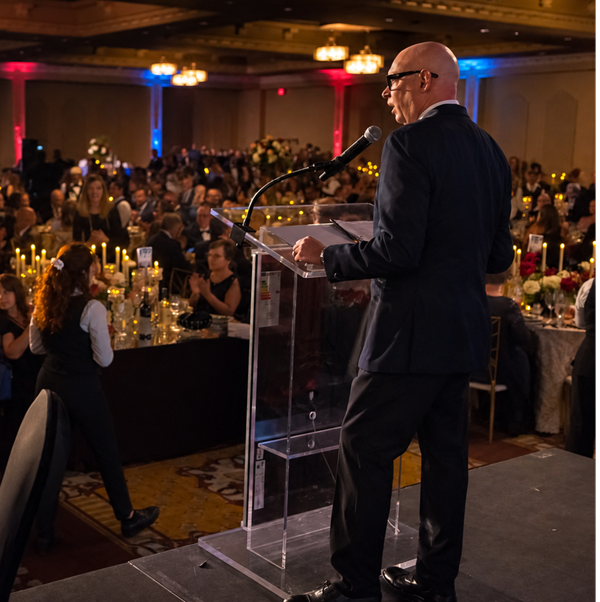 We assigned a record 862 tickets, with close to 800 guests in attendance, including over 40 elected officials. Those numbers tell only part of the story. The true measure of the evening was the tremendous level of support from throughout our membership and the broader maritime community. The Maritime Dinner has become one of the premier gatherings of the Houston maritime community, and this year's results demonstrate that its importance continues to grow.
Most importantly, the success of the dinner directly supports the Port Bureau's mission. The resources generated through the event allow us to continue providing information, advocacy, networking, vessel movement services, industry programs, and initiatives that benefit the broader maritime community.
To everyone who purchased a table, sponsored the dinner, attended, volunteered, donated, or helped make the evening a success- thank you. The 2026 Maritime Dinner was truly a reflection of the strength of our membership and the community we represent.
State of the Ports: Celebrating Our Entire Port Region
Another highlight of the year was the 2026 State of the Ports Commerce Club Luncheon, which brought together approximately 440 attendees from across the region's maritime and business community. The event provided an excellent opportunity to showcase the strength, growth, and future of our port region while highlighting the important work being accomplished at each of our ports.
One of the most valuable aspects of State of the Ports is that it brings the leadership of our regional ports together in one room. Houston, Texas City, Galveston, Freeport, and the surrounding maritime community are connected by geography, infrastructure, cargo, customers, workforce, and shared supply chains. Each port has its own identity and areas of specialization, but together they form one of the most important maritime regions in the country.
A huge THANK YOU goes to our Port Directors and their teams for their participation, preparation, and continued partnership with the Greater Houston Port Bureau and BayTran. Their willingness to come together and share their perspectives is an important part of what makes this event successful. It also demonstrates the collaborative spirit that exists throughout our port community.
I am extremely proud of what we continue to accomplish together and the success of State of the Ports is a reminder that our region should not be viewed simply as a collection of individual ports. We are part of a connected maritime ecosystem that supports energy, manufacturing, international trade, agriculture, transportation, logistics, and thousands of businesses throughout Texas and the nation. That connectivity is one of our greatest strengths.
The Economic Impact: Nearly $1 Trillion in National Value
The significance of the maritime industry is perhaps best demonstrated by the latest economic impact data released by Port Houston. A new Economic Impact Study, based on 2025 activity, found that marine cargo activity through the public and private facilities along the Houston Ship Channel, collectively referred to in the study as the Port of Houston, supported an extraordinary $986.9 billion in total annual economic value across the United States and approximately 3.53 million jobs nationwide.
The study also found that Houston Ship Channel maritime activity supported $537.7 billion in annual economic value in Texas, equivalent to approximately 18.5% of the state's GDP. It also supported 1,886,172 Texas jobs and generated approximately $15.6 billion in state and local tax revenue. The economic benefits reached 98% of Texas counties. The growth since the previous study is particularly noteworthy. Between 2022 and 2025, the economic value supported by maritime activity in the region increased by $98.4 billion, while the number of Texas jobs supported by port activity increased by 345,755. These figures reinforce something those of us working in the maritime industry already know: our ports are economic engines that reach far beyond the waterfront.
The Houston Ship Channel connects Texas producers, manufacturers, energy companies, and consumers with markets throughout the United States and around the world. Its impact extends well beyond the physical boundaries of the channel.
A Regional Story, Not Just a Houston Story
While the Port Houston study provides an extraordinary measure of the economic impact of the Houston Ship Channel, it is important to recognize that Houston is only one part of the greater port region we represent. Our broader Gulf Coast maritime community includes the Port of Texas City, Port of Galveston, and Port Freeport, each of which supports significant economic activity, jobs, investment, and trade. Together, these ports represent an extraordinarily diverse maritime economy, from energy, chemicals, and bulk cargo to containers, automobiles, project cargo, cruise activity, and other forms of international and domestic trade.
For that reason, the $537.7 billion Texas figure from the Port Houston study should not be presented as the combined economic impact of Houston, Texas City, Galveston, and Freeport.
That broader perspective is important. Our region's strength is not based on one port. It is based on the combined capabilities of multiple ports, waterways, terminals, industries, businesses, and communities working together. That is precisely why the work of the Greater Houston Port Bureau remains so important.
As we look ahead, our responsibility is to continue strengthening those relationships, advocating for the infrastructure and policies our industry needs, improving efficiency and information sharing, supporting maritime safety and security, and ensuring that the importance of our port region is understood at the local, state, and national levels.
The results of 2026 give us plenty to be proud of—and even more to build upon.
#myportcommunityisbetterthanyours
About the Author

CAPT Eric Carrero, USCG (Ret.), joined the Greater Houston Port Bureau as president on July 1, 2023. He has 26 years of service in the U.S. Coast Guard, with experience in international affairs, port and vessel operations, and serving in the Sector Houston-Galveston from 2013-2021. CAPT Carrero holds a bachelor’s degree in biology from the University of Puerto Rico and a master’s degree in environmental management and policy from the American Public University System.