
Governor of Fowl and Brute
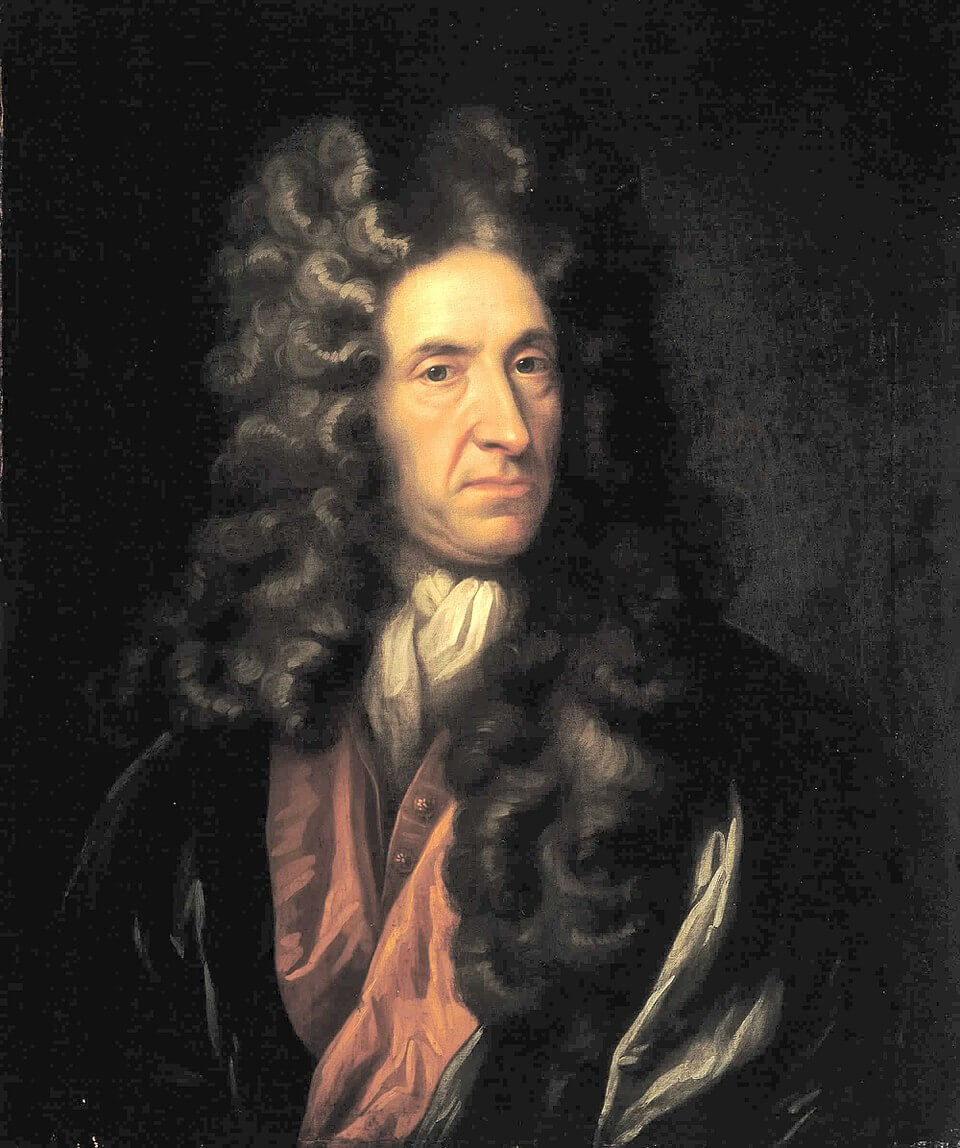
 Daniel Defoe’s publication of The Adventures of Robinson Crusoe in 1719 was greeted with great acclaim throughout England. His fictional tale of a castaway marooned on a deserted island for 28 years mesmerized the literate masses. Heretofore, writers such as Defoe were essayists that authored pamphlets on a wide range of political and social issues. Yet, the novelty of developing fictional characters through complex and challenging experiences via hundreds of pages was unheard of in the early eighteenth century. Its uniqueness was … novel.
Then again, Defoe’s experiences were certainly novel. As a youth, he survived the great plague of 1665 that ravaged England and witnessed the 1666 inferno that destroyed 80% of London. His controversial political tracts landed him in prison on more than one occasion, and he was recruited as a spy by the Crown. Defoe was adept at captivating the reader with his journalistic recounting of historic events such as the hurricane of 1703 that devastated England and killed 8,000 people. Thus, in 1712, his curiosity was aroused when he read about a Scottish buccaneer -Alexander Selkirk - that had been a lone castaway on a South Pacific island 420 miles off the coast of Chile for over four years.
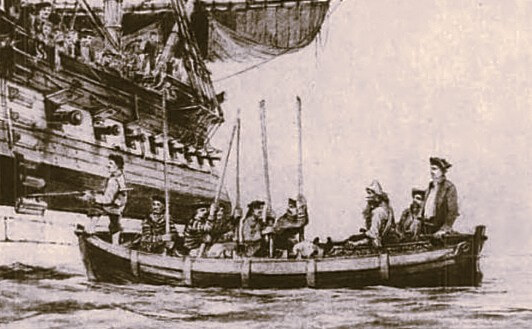
 Selkirk had sailed from Kinsale, Ireland as the Cinque Port’s sailing master in September 1703. The 27-year old’s pugnacious temperament was well suited for sailing aboard a privateer to prey upon foreign merchant ships during the War of Spanish Succession. Yet, it did not endear him to his equally irascible captain. In September 1704, after several failed attempts to seize prizes and secure much needed supplies, Captain Stradling anchored his marginally seaworthy vessel off the coast of the uninhabited Más a Tierra Island. The weary and disgruntled crew were in dire need of fresh water and food and spent a month gathering sustenance and strength. Unfortunately, they did not tend to the worm-ravaged hull of the Cinque Ports. That did not sit well with Selkirk who sensed the crew was on the verge of mutiny.
Thus, when Stradling announced he was heaving anchor to continue their privateering ways along the South American coastline, Selkirk proclaimed he would rather remain on Más a Tierra than sail another league aboard the Cinque Port unless the ship was hauled ashore and repaired. Unfortunately for the stubborn Scotsman, no other crew members joined his protest, and Captain Stradling was more than keen to accommodate his request. To that end, Selkirk was given a Bible, musket, hatchet, knife, cooking pot, bedding and some clothes while a penitent Selkirk begged to not be left behind. His pleas ignored, the Cinque Port sailed beyond the horizon and, as Selkirk predicted, sank off the coast of Peru several months later.
Alone, the marooned sail master was convinced that another ship in need of food and water would rescue him in the coming months. As the months dragged into years, he was forced to relocate inland due to the thousands of mating elephant seals; was besieged by rats every evening; forced to chase down goats for food when his lead shot was exhausted; tamed feral cats to keep the rats at bay; evaded Spanish troops that he inadvertently contacted when they anchored off the island; and fashioned clothing from goat skins to keep the elements at bay. Finally, on February 2, 1709, Selkirk caught sight of a pair of vessels – the Duke and Duchess - flying the British colors anchored in the island’s bay. He hurriedly built a signal fire which prompted a landing party to come ashore.
Incredibly, the pilot of the Duke vouched for the “wild man” the ship’s landing party encountered since he had led a prior privateering expedition that included Selkirk. The crew were incredulous of Selkirk’s physical condition as he outraced man and dog alike to capture many a nimble goat for his rescuers. Selkirk was also instrumental in combating the crew’s scurvy and malnutrition as he provided them with wild herbs and vegetables from his island domain. In recognition of Selkirk’s skills and knowledge, the Duke’s captain addressed him as governor of the island and eventually appointed him as the vessel’s master.
Two percent fewer vessel masters called upon the Lone Star State’s ports in 2025. The annual decline for inland tows was even greater; December’s movements were below that of every month save February. Coincidently, blue water arrivals ended the year with nearly identical numbers as it began 2025.
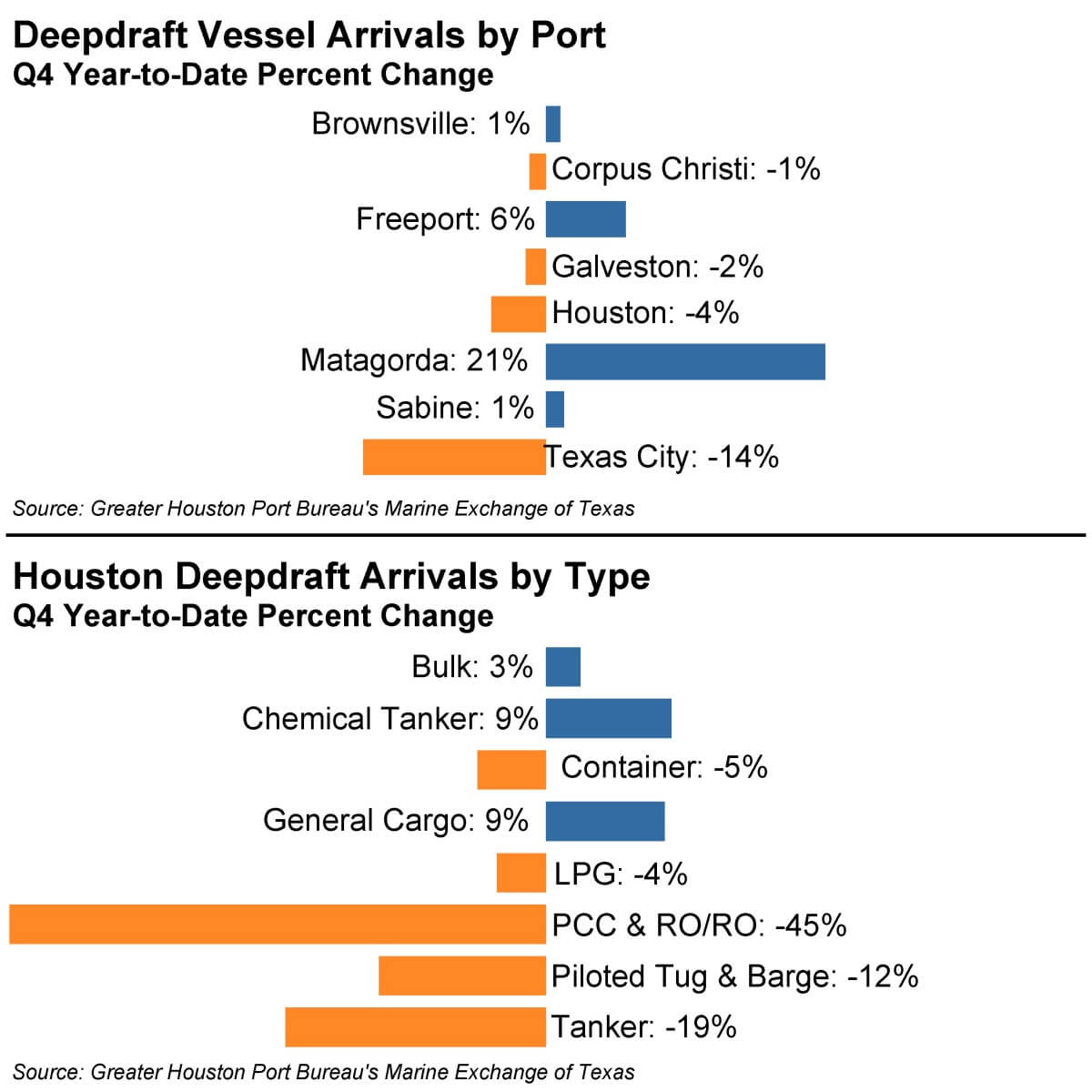
The Port of Brownsville’s arrival tally crept up by three ships or 1% in 2025. Yet, there were some noticeable changes in the composition of those numbers. The largest component of Brownsville’s vessel types were bulkers which were down by 10%. On the other hand, the next most frequent caller – general cargo – was up 28%. It was the 17% rise in tanker calls that pushed the raw numbers into positive territory.
Texas City’s December arrival numbers posted a solid 14% gain in December with its 2nd highest arrivals for the year. Yet, the port ended 2025 14% “astern” of 2024’s arrival count. Mind you, there were a few bright spots with ocean going barges 57% ahead of the prior year’s numbers and the onset of LPG movements in December. Be that as it may, the port’s two largest vessel categories – chemical tankers and tankers – suffered substantial decreases of 21% and 16% respectively.
December was also kind to the Port of Galveston as its numbers were tied for the highest monthly count in 2025. Not surprisingly, this was attributable to the increase in the number of cruise lines operating on its waterfront. The final month of the year saw the greatest number of cruise ships, which were up 7% for the year. Conversely, the chemical tanker calls were off by 6% in 2025; however, tankers continued to arrive in the port on a more frequent basis – 23% to be precise. Ironically, Galveston’s overall arrival numbers lagged 2024 by 2% due to the 6% decrease in chemical tanker arrivals – the vast majority of which were lay berth arrivals. The bottom line is that Galveston is dominating the Gulf of America’s cruise ship business.
Freeport is certainly dominating the state’s ports with the highest percentage gain over the last quarter resulting in a 6% climb for the year. Container ships led the percentage gains at 29% and the port’s most frequent caller – chemical tankers – was up 12% this year. LPG, the next highest category, slipped a modest 1%; however, that was more than offset by the 16% uptick in LNG vessel arrivals.
The opposite was true in the Sabine port region as 3% less LNG vessels plied its waterways in 2025, but 17% more LPG tankers arrived. Nonetheless, the port’s two largest vessel types – chemical tanker and tankers – fell over the last year 3% and 2% respectively. Fortunately, this wane was not enough to prevent the port from exceeding last year’s arrival statistics by 1%.
Corpus Christi also benefited from the robust demand of LNG. The final quarter for the year eclipsed all others, culminating in the highest number of LNG movements for the year in its final month. At year’s end, 15% more LNG vessels berthed at the port. Tankers and chemical tankers are the port’s bread and butter and while the latter equaled 2024’s count, the former waned by 2% resulting in an overall annual downtick of 1%.
Houston’s 2025 wrap was not one for the record books unless one focuses on containers. The number of trucks transporting TEUs to and from the port’s two major container ports appears to know no bounds. The Ship Channel is certainly deeper and wider to accommodate the record number of containers – a record that is surpassed without fail on an annual basis. Alas, the roads that lead to those ports are beyond full. Regardless, a burgeoning regional population combined with the torrid demand for packaged petrochemical exports beckons growth and prosperity. The flow of general cargo and bulkers also reflects the region’s positive growth trajectory. General cargo arrivals rose 9% and bulkers logged a 3% gain in 2025.
There were some rather odd numbers in the final month of the year. Chemical tankers plummeted by 28% for the month but managed to out distance last year by 9%. Tankers also experienced a double-digit monthly leap of 22%. Sadly, this was too little too late as reflected in a 19% plummet for the year. Ocean going barges hit bottom in the same month with a precipitous drop of 27% culminating in a 12% year-over-year deficit.
Arguably, 350 fewer blue water vessels (4% less) navigating the country’s busiest port signals that uncertainty looms on the horizon. Perhaps the see-saw of the where and what of tariffs is creating trade friction or it could be the expectation that international trade is overdue for a contraction. Whatever is in the water, economics is not linear but the resumption of gains following setbacks is inevitable. Then again, the flow of containers and cruise ship calls across the Houston Ship Channel never seems to abate.
Nor did Selkirk’s desire for preying upon unarmed merchant ships. He resumed his buccaneering ways and finally returned to England in October 1711 – eight years after his departure from Ireland. His castaway adventure travelled quickly across the waterfront and was eventually published in 1712 spreading his story throughout Britain.
Unfortunately, it became increasingly difficult for Alexander Selkirk to remain away from sea. He yearned for the solitude he had found on his South Pacific isle prompting the former pirate to join the Royal Navy to – ironically- combat pirates. In November 1720 he set sail aboard HMS Weymouth as its first mate bound for the west coast of Africa. As a rule, the equatorial climes were not kind to sailors and the Weymouth’s crew was no exception as yellow fever spread below its decks. Throughout November and December 1721, sailors succumbed to the fever’s grip and were unceremoniously thrown overboard.
On December 13, 1721, Weymouth’s quartermaster entered into the ship’s log:
“North to northwest. Small Breeze and fair,”
“Took 3 Englishmen out of a Dutch ship and at 8 pm. Alexander Selkirk . . . died.”
The sea which spoke to his soul from his Island domain quietly swallowed the man whose ordeal gave birth to Robinson Crusoe.
I am monarch of all I survey,
My right there is none to dispute;
From the center all around to the sea,
I am the lord of the fowl and the brute.
About the Author

Tom Marian is the General Counsel of Buffalo Marine Service, Inc. He also serves on the Executive Committee of the Port Bureau Board of Directors.