
Coastal Texas Project Gains Federal Momentum in President’s Budget and Congressional Funding
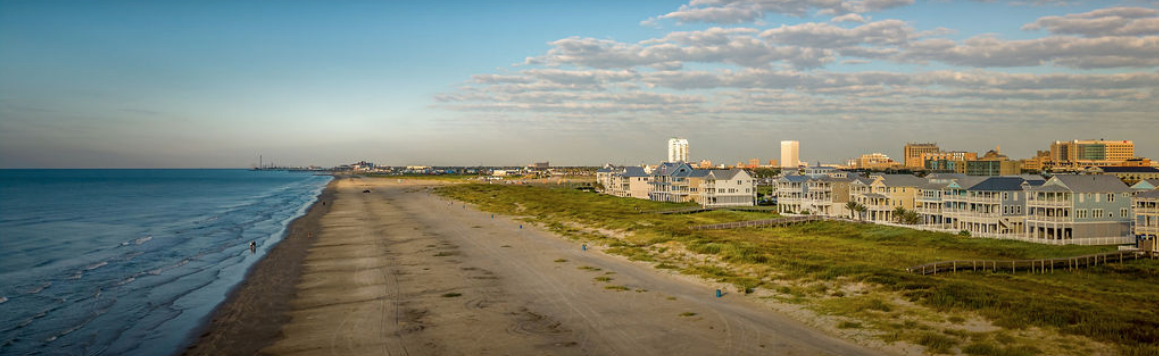 Image courtesy of Gulf Coast Protection District.
The Coastal Texas Project continues to build meaningful federal momentum with two recent funding developments underscoring its growing national importance: inclusion in the President’s FY27 Budget with discretionary funding authority and a FY26 $5 million appropriation from Congress.
Together, these signals mark a critical step forward for the largest coastal protection effort in U.S. history.
Presidential Budget Signals Federal Commitment
The release of the President’s Budget includes administration discretion for the Coastal Texas Project, and signals that it’s a priority for the Administration given its energy dominance goals. The USACE Work Plan includes Administration discretionary funding on top of the community project funding already secured by U.S. Congressman Randy Weber.
Historically, administration discretion provides federal agencies with flexibility to advance planning, coordination, and technical work, ensuring the project continues moving forward while Congress considers larger construction funding. Importantly, budget inclusion signals confidence in the Coastal Texas Project as a nationally significant resilience and protection effort—one aligned with federal priorities around energy dominance, economic security, and disaster preparedness.
For the Gulf Coast Protection District ("GCPD") and its partners, the funding affirms years of advocacy focused on elevating the project from a regional need to a matter of national interest. It also helps sustain progress with the U.S. Army Corps of Engineers ("USACE") and other federal partners, keeping the project active, visible, and positioned for future investments.
Congress Delivers with $5 Million Appropriation
In another recent funding milestone, the U.S. House and Senate both passed the Energy and Water Development Appropriations Bill for Fiscal Year 2026, securing $5 million in federal funding for the Coastal Texas Project.
The congressional funding represents an essential step in translating plans into action. It demonstrates bipartisan recognition of the Gulf Coast’s vulnerability to hurricanes, storm surge, and coastal degradation—and acknowledges the economic stakes involved. The Texas Gulf Coast supports a large share of the nation’s energy production, refining capacity, petrochemical manufacturing, and maritime commerce. Protecting it is not only a regional priority, but a national imperative.
This appropriation also reinforces the message that the Coastal Texas Project has broad support across branches of government. When paired with the President’s discretionary funding, it creates a powerful one‑two signal: federal leadership and Congress agree that Coastal Texas deserves sustained investment.
Building Toward Long‑Term Protection
The Coastal Texas Project is envisioned as a comprehensive system combining coastal barriers, ecosystem restoration, and surge protection features designed to reduce hurricane and storm surge risk for communities and infrastructure stretching from Galveston Bay to the Houston Ship Channel.
While full construction will require substantial long‑term funding, early investments—like the recently announced discretionary and appropriated dollars—are essential building blocks. They help refine designs, advance coordination, and lay the groundwork for larger future appropriations.
“For GCPD, the funding represents far more than line items in a federal budget,” said Coalter Baker, executive director of the Gulf Coast Protection District. “It is the culmination of an essential region working together to gain federal trust in the Coastal Texas Project, and yet another energy dominance win for the Trump Administration. The strength of persistent collaboration among regional, state, and federal partners, and tangible progress toward protecting coastal communities, critical infrastructure, and ecosystems is ultimately the reason for success. Prioritizing this project moves us closer to delivering long‑term, generational protection for the Texas coast and the national economic assets it supports.”